Quick Information

ADDRESS

Ny Vestergade 10, 1471 København K, Denmark

Did you know?

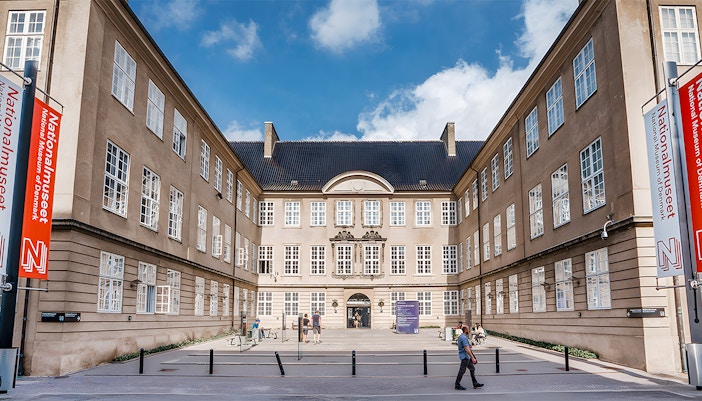
The museum is housed in the historic Prince’s Palace, right in central Copenhagen.

It holds collections spanning more than 10,000 years of Danish and world history.

The famous Nordic Bronze Age Sun Chariot is one of its star attractions.

Why is the National Museum of Denmark worth visiting?

You step from a quiet Copenhagen street into high-ceilinged rooms where bog bodies, gold, carved altarpieces, and Arctic kayaks share the same palace corridor. The museum feels less like an exhibition and more like a walk through centuries.

It was created to gather Denmark’s past into 1 national collection, and that ambition still shapes the visit. The Prince’s Palace setting makes everyday tools, royal treasures, and sacred objects feel equally consequential.

The payoff is continuity. You leave the museum understanding how Bronze Age ritual, Viking wealth, medieval faith, and modern identity connect across 1 small country. Few museums make a nation’s story feel this coherent without flattening it.

Skip it if: You dislike text-heavy museums or have under 90 minutes; this place rewards slow looking and comparison.

What to see at the National Museum of Denmark?

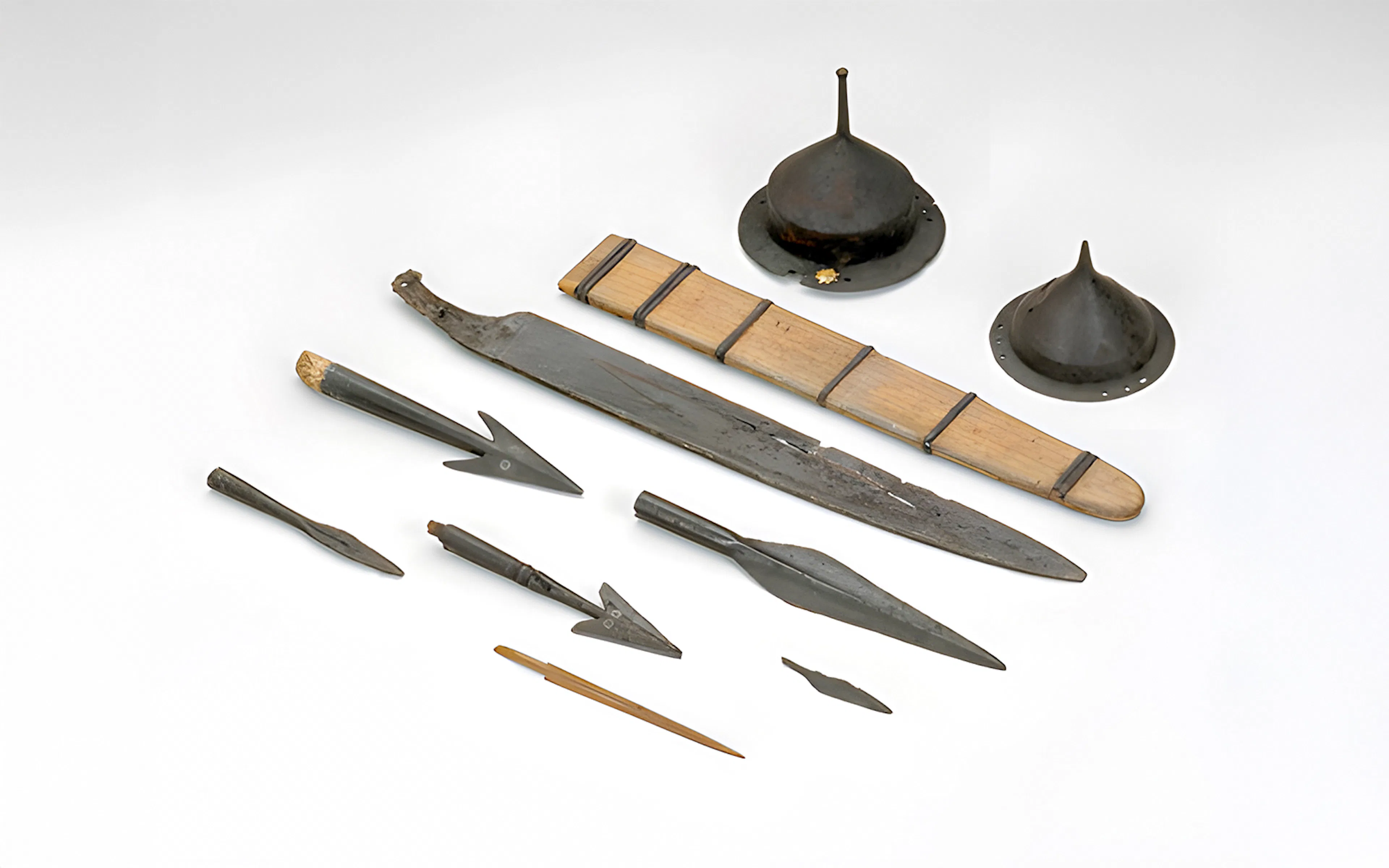
Vimose weaponry from 2nd century AD, including spears, shields, and arrowheads.
Sun Chariot sculpture at National Museum of Denmark, Copenhagen.
Egtved Girl burial display at The National Museum of Denmark.
Gundestrup Cauldron with intricate carvings, The National Museum of Denmark.
Viking swords displayed at The National Museum of Denmark.
Cross of Dagmar with gemstones, The National Museum of Denmark.
Seal-skin Inuit gut parka displayed at The National Museum of Denmark.
Children engaging in a cultural exhibit at the National Museum of Denmark.
Victorian era room with ornate furniture and red drapes at The National Museum of Denmark.
1/9

Danish prehistory

Begin with the sweep from Ice Age hunters to Bronze Age ritual. This is where the museum earns its reputation, and where the chronological story becomes easiest to follow.

The Trundholm Sun Chariot

Tiny and luminous, this gold-covered sun disk and horse condense an entire Bronze Age worldview into 1 object. The case draws steady attention, so see it early.

The Egtved Girl

This Bronze Age burial is haunting because it feels intimate rather than monumental. Her clothing, coffin, and personal objects turn prehistory into a human story instead of an abstract timeline.

The Gundestrup Cauldron

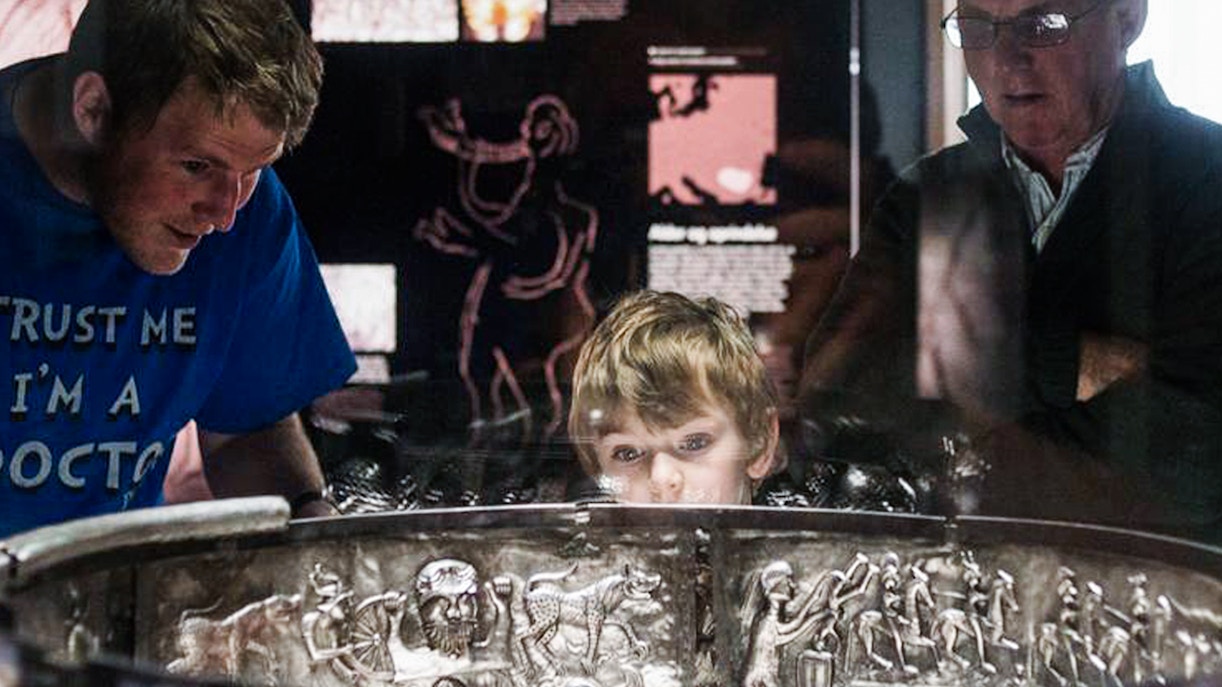
A massive silver vessel covered in enigmatic figures, animals, and ritual scenes. Give yourself a few quiet minutes here; the imagery reveals more the longer you circle the case.

Viking world

Silver hoards, jewelry, weapons, and the famously heavy gold ring make this one of the busiest zones. It’s best to visit before midday, when school groups and guided tours begin clustering here.

Middle Ages and Renaissance

Next, take a look at church art, reliquaries, royal objects, and the Cross of Dagmar. The tone shifts from warrior wealth to sacred and courtly power, which keeps the historical arc intact.

People of the Earth

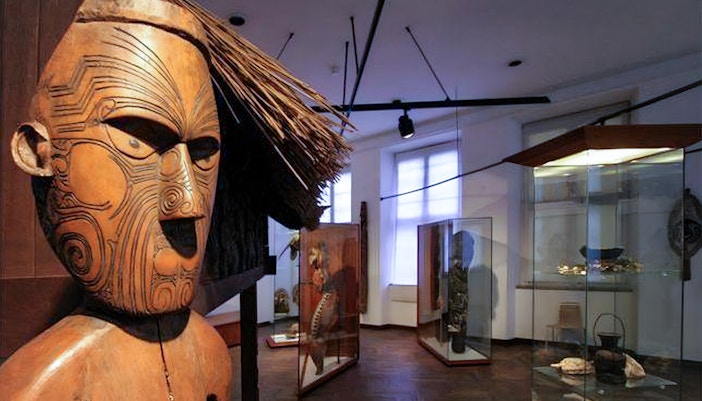
The ethnographic galleries widen the story beyond Denmark, with standout Greenland material including seal-skin equipment and an Inuit gut parka. These rooms are usually calmer and work well later in your visit.

Children’s Museum

If you’re visiting with kids, take a break here. Hands-on spaces let children sit in a Viking ship, step into older Danish settings, and reset after exploring the more object-heavy galleries.

Klunkehjemmet

This preserved 1890s apartment feels unlike anything else in the museum: intimate, domestic, and densely furnished. Access is by guided tour at fixed times, so check availability as soon as you arrive.

How to Explore the National Museum of Denmark

Visitors examining the Gundestrup Cauldron at the National Museum of Denmark.

Plan for 2–4 hours; around 2 hours if you stick to the Danish highlights and closer to 4 if you add the ethnographic galleries, the Children’s Museum, and Klunkehjemmet.

  • Suggested Flow: Start with Danish Prehistory as soon as the museum opens, then move straight into the Viking rooms before school groups and midday tours thicken the traffic there. Continue into the Middle Ages and Renaissance galleries, then head to People of the Earth once your eye needs a change of rhythm; the shift from Danish archaeology to Greenland and global collections keeps the visit from blurring together.
  • Must-see: the Trundholm Sun Chariot, the Egtved Girl, the Gundestrup Cauldron, and the Viking gold ring. Optional: the Children’s Museum if you’re with kids and Klunkehjemmet if you can spare 45 minutes for a timed guided visit.
  • Guided vs. self-paced: Self-paced works if you use the map carefully, but a highlights tour or audioguide adds real value because the layout can feel sprawling and many objects matter more once their stories are decoded.
Brief history of National Museum of Denmark

Prince’s Palace was completed in 1744 in central Copenhagen, designed by Nicolai Eigtved for Crown Prince Frederik. In 1807, Denmark established the Royal Commission for the Preservation of Antiquities, laying the foundation for a national historical collection. This effort gained structure in 1819 when Christian Jürgensen Thomsen introduced the Stone, Bronze, and Iron Age framework, reshaping archaeological study.

In 1892, the National Museum of Denmark was formally established within Prince’s Palace by consolidating royal and state collections under one institution. Throughout the 20th century, the museum expanded its archaeological, ethnographic, coin, and church art holdings, growing into the country’s leading cultural history museum.

Today, it presents over 14,000 years of Danish and global history in Copenhagen while managing key collections and historic sites across Denmark.

Why the museum matters beyond Denmark

The National Museum of Denmark is more than a place that preserves historical objects; it also played a major role in shaping how history itself is interpreted. Its collections were closely tied to the development of the Three-Age System, which gave archaeologists a practical framework for organizing prehistory before written records existed. As a result, visitors move through more than the story of Denmark alone. They are also experiencing the intellectual model that continues to influence museum storytelling across Europe.

Frequently Asked Questions About the National Museum of Denmark

Yes — especially if you want 1 place that explains Denmark beyond postcard landmarks. It gives first-time visitors cultural context before castles, Viking sites, or royal attractions elsewhere in the city. Browse tickets.

More Reads

National Museum of Denmark history

#

National Museum of Denmark architecture

#

Inside the National Museum of Denmark

#

National Museum of Denmark tickets

#